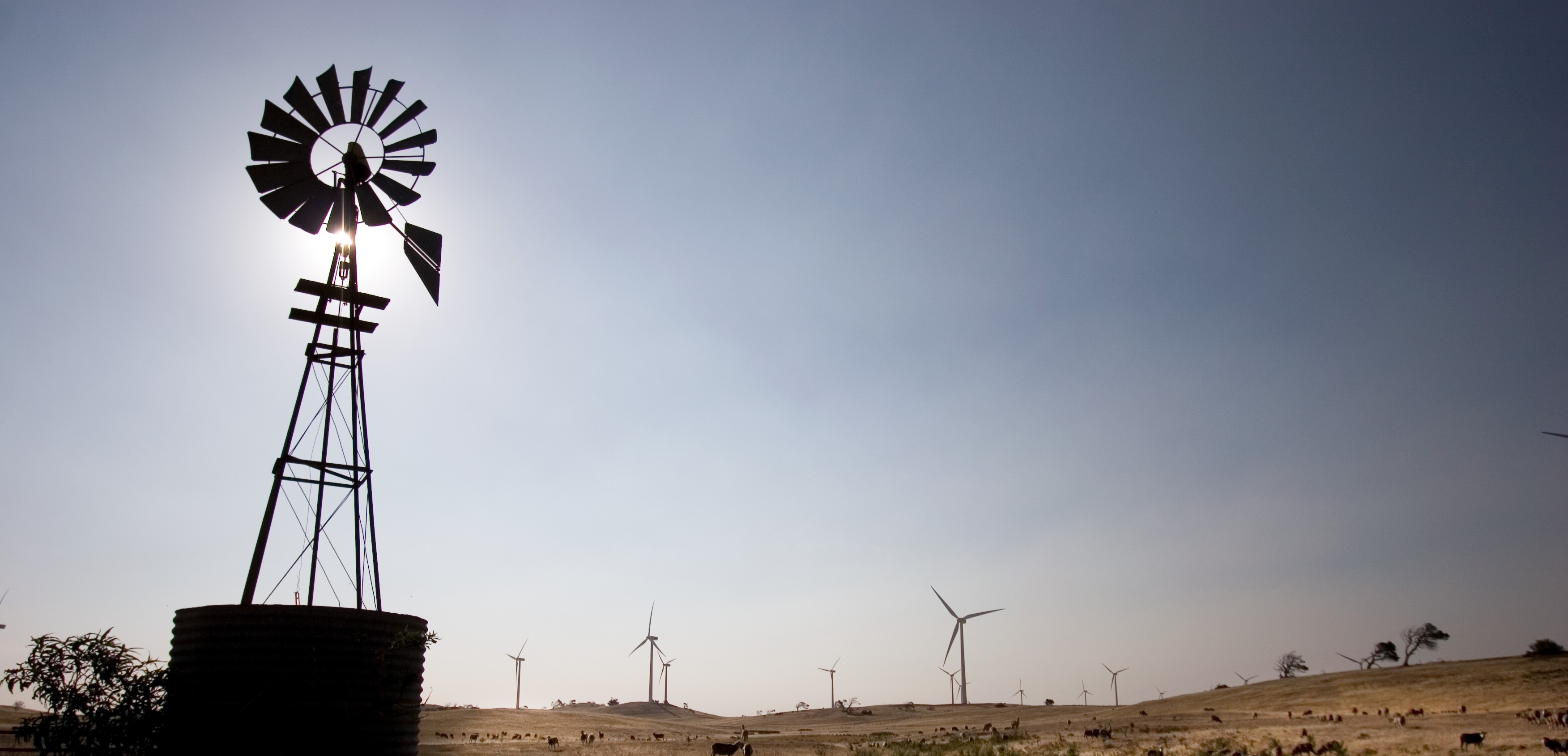
The Bowelling Wind Farm (BWF or Project) will be located approximately 170 km south of Perth, Western Australia, in an area classified as the Central region of Western Australia. BWF's boundary sits within the Shire of West Arthur.
The Project will consist of around 35 turbines which will generate around 150 MW of energy.
The project will likely utilise Vestas V163-4.5 MW turbines. These turbines will have a hub height of around 149m and a maximum blade tip height of approximately 236m.
Bowelling Wind Farm will construct new unsealed access roads linking existing Council roads to the turbine locations. In many cases, the new roads will involve upgrading existing farm tracks, which will also help landholders with farm operations, and potentially emergency responders in the event of bush fires or other emergencies. In all cases, new access roads will be designed with the objective of minimising impacts to existing vegetation.
The new access roads will be unsealed but will be constructed to allow for transport of heavy materials and equipment during construction, and to allow for long-term operation of the wind farm. In addition, BWF will work with the local Shire Council to upgrade some existing Council roads as required to support project traffic requirements.
The proposed wind farm is currently assessing the requirements to connect into the South-West Interconnected System (SWIS). Within the wind farm, the turbines will be connected to each other and to the substation primarily via underground 33kV cables.
Wind turbines convert the natural movement of air into mechanical energy through rotation of the turbine blades. This mechanical energy is converted into electricity, which is sent to the electrical grid.
The Bowelling Wind Farm will be built using Vestas wind turbines. More than 200,000 MW of Vestas turbines have been installed in 89 countries around the world, accounting for almost 1 in 5 of all turbines installed worldwide.
Activities during the development stage of the wind farm will include:
- Discussions with host landholders
- Installation of wind monitoring equipment such as masts or remote sensing units
- Identification of potential wind turbine locations, and design of access routes and electrical infrastructure
- Consultation with local councils and State/Federal government stakeholders
- Engagement with the local community and project neighbours
- Environmental impact assessment preparation, lodgement and taking feedback under due consideration, including potential biodiversity, noise, visual, traffic, socioeconomic, bushfire, heritage, aviation and other impacts
- Preparation of State and Federal permitting applications and documentation
- Grid connection studies in accordance with requirements set by the Australian Energy Market Operator (AEMO) and the local network service provider (Western Power)
- Financial modelling
- Project funding and investment decisions.
Project development is complex. Development requires continuous refinement to connect a new power station to the grid network and meet the WA Department of Planning, Lands and Heritage (DPLH) stringent environmental requirements under both the Environmental Protections Act (EPA) and the Commonwealth's Department of Climate Change, energy, the Environment and Water (DCCEEW) requirements under the Environmental Protection and Biodiversity Conservation Act (EPBC).
The project will be assessed under the Western Australian State Environmental Protection Act 1986 (EPA) and the Federal Environmental Protection and Biodiversity Conservation Act 1999 (EPBC).
Bowelling Wind Farm is committed to open and transparent engagement throughout the project. The team has been actively engaging with landholders, neighbours, the Shire of West Arthur communities, government at all levels and local businesses since 2024.
We appreciate the opportunities to discuss the need for the project, its scale and dynamics, and the community benefits.
Information about the proposed project is available through several avenues, including via our contact page, our email info@bowellingwindfarm.com.au, and phone number 1800 318 425.
We will advertise and host public information sessions as we move through the development process. In addition, we will provide project update newsletters and meet individually with project hosts and neighbours.
Bowelling Wind Farm has begun consultations with the Gnaala Karla Booja Southern Noongar Aboriginal Corporation and will meet with the Wilman Noongar people of the area continuing to maintain strong ties to ensure the First Nations People are engaged throughout the project’s life cycle.
The wind farm Project must satisfy the stringent biodiversity impact assessment requirements of both the WA Government (via the DPLH) and the Australian Federal Government (through the DCCEEW). The findings of the biodiversity assessment and proposed mitigation measures will be presented to both departments as part of the referral process.
The Project layout will be designed to minimise impacts to biodiversity by establishing infrastructure and roads to avoid areas of high conservation significance. Where vegetation clearing may be required, the wind farm will identify strategies in which to either mitigate the clearing or offset the clearance areas through extensive study and assessment.
The Project site mainly consists of broad acre cropping farmland, livestock farming, woodland, shrubland and saltwater areas. Extensive flora and fauna studies will be undertaken to identify, avoid, and minimise potential biodiversity impacts including traffic and transport, electromagnetic interference (EMI), noise, bushfire, biodiversity waste, visual & landscape socioeconomic, Indigenous and historic heritage and water usage.
The Bowelling Wind Farm will ensure cultural heritage is protected and will continue to consult with Aboriginal stakeholders throughout project development and construction. Bowelling Wind Farm will complete cultural heritage surveys to identify items and locations of cultural significance within the proposed Project area. The findings of cultural heritage surveys will inform the design of the wind farm in conjunction with the Gnaala Karla Booja Aboriginal Corporation.
Several studies commissioned across Australia have examined potential impacts of wind farms on property values and have found no evidence that wind farms lower rural property values, including the Assessment of the Impact of Wind Farms on Surrounding Land Values in Australia (Preston Rowe Paterson, 2013) available here:
The majority of wind farms are developed on agricultural land and wind turbines are very much compatible with existing farming operations. Turbines occupy only a small amount of land, and landholders can continue normal grazing or cropping activities. Livestock has often been seen using turbine towers for shade and shelter from wind and rain. The income provided to landholders hosting wind farm infrastructure can help make farms more resilient to the impacts of droughts, fires and commodity price fluctuations.
The proposed Project will create direct economic opportunities for local workers and local businesses, and indirect benefit for the local economy through the multiplier effect of economic activity.
A workforce accommodation strategy will be developed when the Project is approved. There may be an ebb and flow of workers and accommodation requirements, but we expect that up to a third of the full-time workforce during construction will be from the local region.
When the Project is approved, Bowelling Wind Farm will establish a Community Benefit Fund. The Community Benefit Fund will provide a meaningful financial contribution that benefits the whole community.
In addition, a Social Impact Assessment of the proposed Project will be undertaken and will show the financial benefits of the Project in direct and indirect wages and profits through construction and operation phases. Information about the proposed Project is available through several avenues, including this website, the 1800 318 425 phone number and the dedicated email info@bowellingwindfarm.com.au.
We will advertise and host public information sessions as we move through the development process. In addition, we will provide Project update newsletters and meet individually with Project hosts and neighbours.
The Project will create up to 400 new jobs during construction and up to 10 long-term service and maintenance jobs during operation. A range of skills will be required, including engineering, trades (electrical, mechanical, construction), transport, building material providers, equipment operators, consultants and administrative staff.
We expect construction to begin in 2027, subject to development consent and grid connection approval or other commercial offtake agreement. Construction will take approximately 2.5 years to complete.
A traffic impact assessment is scheduled to take place prior to Development Approval.
Wind farm equipment may originate from the Port of Bunbury and travel along state route 107. The delivery of larger plant associated with the turbines will be undertaken by Oversize Over Mass (OSOM) vehicles. The delivery of the turbine plant will be conducted by a specialist transport company with experience working on wind farm projects. Vehicles are subject to specific permits, ensuring the proposed delivery method is undertaken in a manner considered acceptable to the road authorities.
These trips are extraordinarily well-planned and coordinated to ensure public safety and traffic control where required. There will be lead and follow escort vehicles.
We are currently working to identify suitable traffic management techniques such as pullover bays which can be implemented to minimise delays for other road users, including local businesses.
A comprehensive management plan will be informed by the traffic impact assessment and will be in conjunction with the Shire of West Arthur Council.
Numerous reviews of research literature conducted by leading health and research organisations worldwide, including Australia’s National Health and Medical Research Council (NHMRC), have concluded there is no published evidence to link wind turbines with adverse health effects.
Although WA does not have specific guidelines for wind farm noise, the Project will follow the most relevant Wind Farm Noise Guidelines which specify some of the most stringent noise criteria in the world. The allowable level is somewhere between a whisper and a quiet library in terms of noise. This level is set to ensure that noise levels from wind turbines are compatible with surrounding land uses and to ensure that noise levels do not significantly affect the living experience of people residing in the area.
As part of the assessments to be conducted, Bowelling Wind Farm will engage a specialist consultant to prepare an Aviation Impact Assessment. The assessment evaluates existing aircraft operations (both commercial airlines and local operators) in the vicinity of the wind farm. It is possible that the Civil Aviation Safety Authority (CASA) may recommend lighting for aircraft safety and if lighting is required, it will be installed on the turbine nacelle and will be shielded to reduce the amount of light visible at ground level.
The development will include an Aviation Impact Assessment, this will examine the potential impacts of aerial spraying. One way to ensure no impact to aerial spraying is by shutting down relevant turbines while spraying takes place, something we do regularly at wind farms across Australia.
The typical lifespan of a wind turbine is 30 years.
At the end of project operations three things can happen to a wind farm:
The project is extended through a third-party engineering companies certification;
The project is repowered or redeveloped;
The wind farm is decommissioned.
The asset owner of the wind turbines will be responsible for decommissioning the wind farm.
The typical Vestas wind turbine is around 88% recyclable. This includes the steel which forms the tower, and the aluminium and copper used in electrical equipment within the turbine. Research and development is underway to recycle the remaining 12%. Vestas has announced a goal of achieving zero-waste wind turbines by 2040.

Contact us
We're here to answer questions, provide updates and receive feedback
info@bowellingwindfarm.com.au
1800 318 425